
In Brief
- The biggest risk during the 2026/27 season may not be below-normal and unpredictable rainfall itself, but the financial pressure that follows reduced production.
- Farming businesses that emerge stronger from difficult seasons are often those that pay as much attention to cash flow and working capital as they do to agronomy.
- This may be one of those seasons where financial discipline matters more than production ambition.
From Weather Risk to Financial Pressure
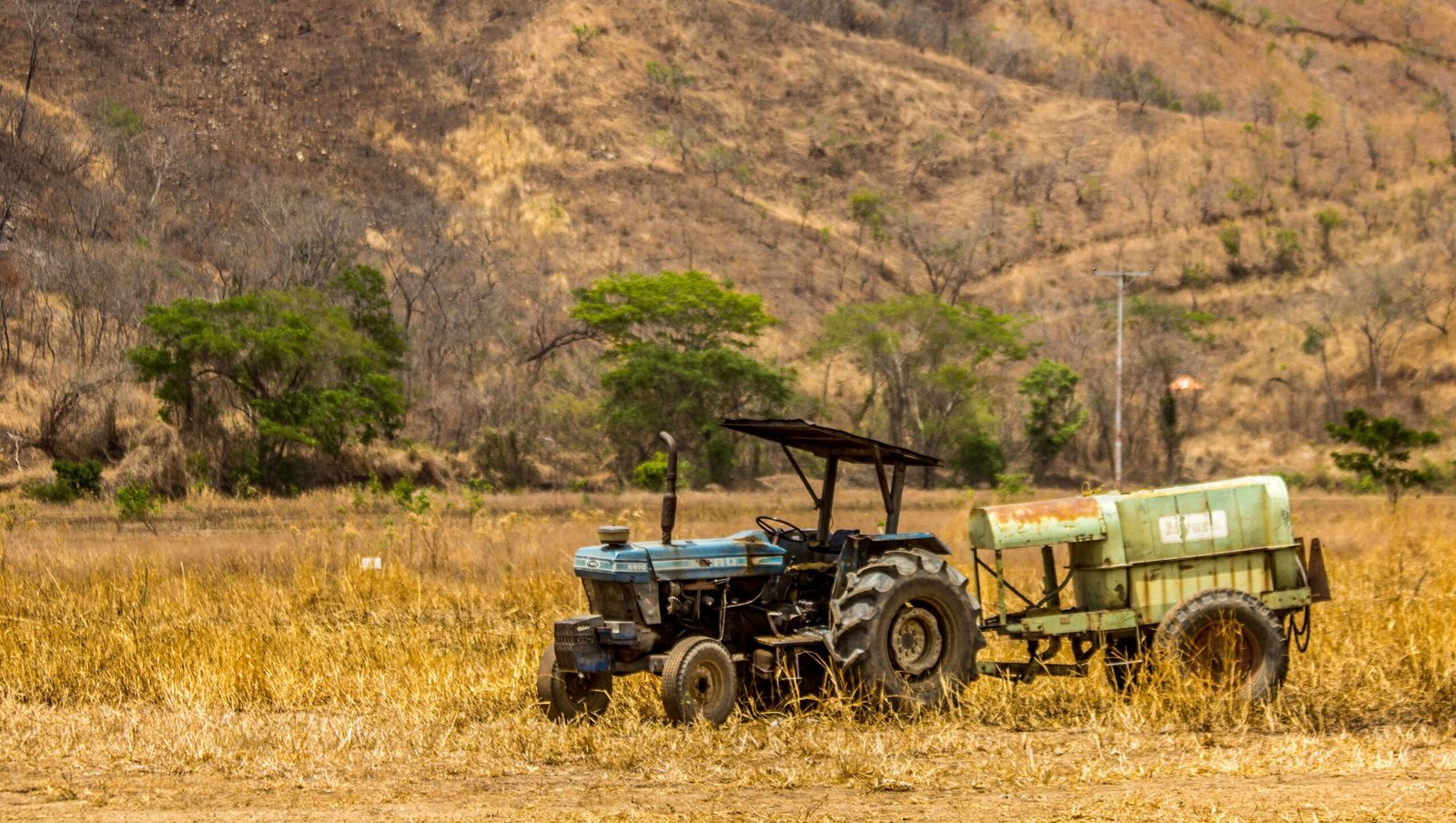
Whenever an El Niño season is forecast, farmers naturally focus on rainfall. That is understandable. Rainfall determines planting dates, influences crop development, affects grazing conditions, and shapes yield expectations. It is also one of the few variables in farming that remains completely outside our control. We can improve soil health, choose better varieties, invest in irrigation, and strengthen management, but none of us can make it rain.
What is also interesting, however, is how quickly a weather issue becomes a major business concern. Average to below normal rainfall does not appear directly on an income statement or cash flow forecast, yet its consequences do. Reduced yields mean fewer tones available for sale. Failed crop establishment may require replanting or even an unrecoverable input cost. And for cattle ranchers, poor grazing conditions increase feed costs. It doesn’t matter which enterprises you specialize in, the economics of production remains the same: lower production spreads fixed costs across fewer units of output. Before long, what started as a weather problem begins showing up in cash flow, profitability, debt servicing capacity, and working capital requirements.
This is why I believe the conversation around El Niño is often too narrowly focused on production. Production matters, but farming businesses do not fail because of weather alone. More often, they struggle because the financial consequences of difficult weather are not fully understood before the season begins. In other words, rainfall may create the shock, but cash flow often determines whether the business absorbs that shock successfully.
Difficult Seasons Rarely Create New Problems
One of the most interesting observations I have seen working with farmers and also in my own farming journey is that difficult seasons rarely create entirely new business weaknesses. Instead, they expose weaknesses that already exist.
A favourable season can hide many management shortcomings. Higer yields volumes can compensate for poor budgeting, poor record keeping, loose cost control, inefficient resource allocation, and expansion decisions that would be difficult to justify under tougher conditions. When production performs well, those weaknesses remain largely invisible because output covers many mistakes.
Difficult seasons remove that cushion. This also explains why two farmers operating in the same region, experiencing similar rainfall and facing relatively similar costs structures, can finish the season with completely different business outcomes. One may emerge under financial pressure while the other remains relatively stable. The difference is not always agronomic. More often, the difference can be found in planning, liquidity, financial visibility, and the quality of decisions made before conditions became difficult.
As weather forecasts continue to point towards a potentially challenging season, I believe the businesses that perform best will not necessarily be those targeting the highest yields or the largest production footprint. They may instead be the businesses that understand their numbers, preserve financial flexibility, and recognize the difference between optimism and planning.
The Difference Between Production and Profitability
Whenever uncertainty increases, some farmers respond by trying to produce more. Their thinking is understandable. If a season may be difficult, perhaps planting more hectares or maintaining higher livestock numbers will compensate for the risk.
The problem is that production and profitability are not always the same thing. Every hectare planted requires capital long before it generates revenue. The more the production the more the input cost to be incurred, in as much as we may factor in the economies of production, it still remains that more hectares added to the production plan, the more cash must be committed before any income is received.
The same principle applies to livestock. Maintaining higher stocking rates can increase production potential, but it can also increase exposure to feed costs, water shortages, grazing pressure, animal health challenges, and cash flow requirements if conditions deteriorate.
What I find particularly interesting about difficult seasons is that they force management teams to confront a question they often ignore during favorable periods: where does each dollar of capital generate the best return?
That question changes the conversation. Instead of asking how much can be planted, the discussion becomes which enterprises or ventures deserve more capital. Instead of focusing more on the livestock herd or stock size, the discussion becomes whether available resources justify those numbers. The focus shifts from production for its own sake to the efficient allocation of scarce resources.
In uncertain conditions, profitability and production can move in different directions. Larger output does not always create a stronger business.
How we can help: If your farming or agribusiness operation is preparing for a more uncertain production environment, I support business leaders with financial planning and analysis, budgeting and forecasting, cash-flow planning, scenario modelling, and strategic decision support to help turn uncertainty into informed decisions.
Why Working Capital Deserves More Attention
If there is one concept that I believe deserves far more attention during an El Niño year, it is working capital. Working capital refers to the resources available to fund day-to-day operations. In simple terms, it is the cash needed to keep the business functioning while waiting for revenue to arrive. Farming places unique pressure on working capital because most expenditure occurs months before income is generated.
Also Read: How to Navigate Working Capital Gaps in Farming Ventures
Long before a farmer harvests a crop, the business has already committed money to seed, fertilizer, chemicals, labor, fuel, transport, machinery, irrigation, and countless other operating expenses. Those costs arise regardless of what rainfall eventually does.
This creates an important imbalance. During a difficult season, many costs remain relatively fixed while revenue becomes increasingly uncertain. Suppliers still expect payment. Workers still need to be paid. Loan repayments still fall due. What changes is confidence in output and sales.
The result is that financial pressure often appears long before the harvest, that is if you are going to harvest at all. Many farming businesses discover that the greatest challenge during difficult seasons is not necessarily producing a crop. It is maintaining enough liquidity to keep operating until that crop eventually becomes income.
This is one reason I encourage farmers and agribusiness owners to spend more time understanding cash flow requirements before the season starts. Businesses that understand their funding requirements are generally better positioned to react when conditions change.
Why Scenario Planning Matters More Than Forecasting
A weather forecast tells us what may happen. A financial scenario analysis helps us understand what happens to the business if it does. This distinction is important because management decisions are ultimately financial decisions. Every planting decision, financing decision, expansion decision, and input purchasing decision carries financial consequences.
One of the simplest but most valuable exercises any farming business can undertake is to assess how the business performs under different outcomes. Not because those outcomes will definitely happen, but because they reveal where vulnerabilities exist.
A cropping programme may appear highly profitable under expected rainfall assumptions. The picture may change significantly if yields decline, planting is delayed, or commodity prices fall. The objective is not to identify the future perfectly. It is to understand which assumptions matter most and where pressure is likely to emerge if conditions become less favorable than expected.
In my experience, businesses that conduct this type of analysis often make better decisions long before the season begins. They know which expenditure can be delayed, which investments remain critical, and how much financial flexibility exists if conditions deteriorate.
If you need help in doing your scenario planning and financial modelling, you can also check out our FP & A Services and see how me and my team can help you.
When Cost Cutting Becomes a Risk
One of the more predictable responses to uncertainty is aggressive cost cutting. Whenever difficult conditions are forecast, businesses naturally begin looking for ways to spend less. The challenge is that not all costs should be treated equally.
There is a significant difference between eliminating waste and reducing productive capacity. Delaying machinery maintenance may improve short-term cash flow while increasing the risk of equipment failure later. Cutting fertilizer applications may reduce expenditure today while substantially reducing output potential months later. Reducing skilled labor may save money immediately while creating operational inefficiencies that persist far beyond a single season.
What difficult seasons often require is not indiscriminate cost reduction, but disciplined resource allocation. The goal should be understanding which expenditure genuinely contributes to productivity, resilience, and profitability, and which do not. More resilient businesses tend to become more selective during difficult periods. They do not necessarily spend less. They become more deliberate about where money is spent.
What This Season May Ultimately Reward
This 2026/2027 summer cropping season may end up rewarding a different set of capabilities than many farmers expect. Much of the attention will naturally remain focused on rainfall forecasts, planting conditions, and production outlooks. Yet the businesses that emerge resilient are likely to be those with clear budgets, realistic assumptions, disciplined cash flow management, and a better understanding of their financial position.
That does not make them immune to poor weather. No amount of planning can eliminate climatic risk. What it does provide is the ability to respond earlier, adjust faster, and preserve financial stability when conditions become more difficult than expected.
As an agricultural economist, I have found that the businesses which consistently navigate uncertainty best are rarely those relying on favorable outcomes. They are usually the ones that understand how their numbers behave under different scenarios and make decisions with that understanding in mind.
Final Thoughts
The discussion around El Niño often centers on rainfall, but the more important discussion may be about financial resilience. Difficult seasons test much more than production systems. They test management quality, capital allocation discipline, cash flow planning, and the ability of a business to withstand pressure without compromising its future.
For many farming businesses, the most important final preparation for this season may therefore have less to do with predicting the weather and more to do with understanding the economics of the business itself. The farmers who emerge strongest from uncertain conditions are not always the luckiest. More often, they are the ones who entered the season with realistic assumptions, tested their numbers, protected their working capital, and built enough flexibility into their plans to respond when circumstances changed.
In the end, weather may shape the season. The quality of management decisions will largely determine how the business experiences it.