In Brief
- Primary farming focuses on the biological production of crops and livestock, whereas agribusiness represents the surrounding commercial ecosystem like inputs, finance, processing, logistics, and trading, that transforms biological yields into bankable value.
- Growth requires moving beyond raw farm production through vertical integration (moving up or down the value chain), horizontal expansion (scaling similar farming operations), pivoting into service provision, or engaging in strategic mergers.
- Transitioning from a purely production-focused farm to a commercial agribusiness requires evaluating your enterprise against practical realities, such as working capital cycles, off-take security, post-harvest infrastructure, and corporate governance.
Agriculture Is an Economic Ecosystem, not a Single Industry
When most aspiring entrepreneurs express a desire to enter the agricultural space, they often envision a singular path centered on tilling land or raising livestock. In practice, agriculture is not a single, isolated industry, but an interconnected economic ecosystem made up of distinct activities operating across a vast value chain. Deciding to be a player this space requires recognizing that farming sits at the center of the system, but it represents only one node within a far larger business network.
To navigate this landscape effectively, you must first build your appreciation of some key concepts. Agriculture is defined as the science, art, and biological practice of cultivating soil, growing crops, and raising livestock to produce primary food, fiber, and raw materials. Agribusiness, by contrast, is the comprehensive commercial apparatus surrounding that primary production, spanning input manufacturing, agro-financing, farm machinery supply, storage, post-harvest logistics, industrial processing, commodity trading, and retail distribution. While agriculture focuses on the biological generation of a crop, agribusiness governs the commercial channels, operations, and financial systems required to convert that physical output into market value.
Understanding this distinction is vital because each layer of the agricultural economy presents entirely different business models, risk profiles, and skill requirements. Think of a company developing high-yield hybrid seeds operates as a biotechnology firm; a firm hauling grain functions as a logistics operator; or an enterprise milling maize into flour manages an industrial manufacturing business, while all these activities serve the same end market, they require completely different combinations of working capital, operational expertise, and market intelligence. Entrepreneurs who approach agriculture as a monolithic sector risk committing resources to primary production simply because it is familiar, missing lucrative avenues across the surrounding support architecture.
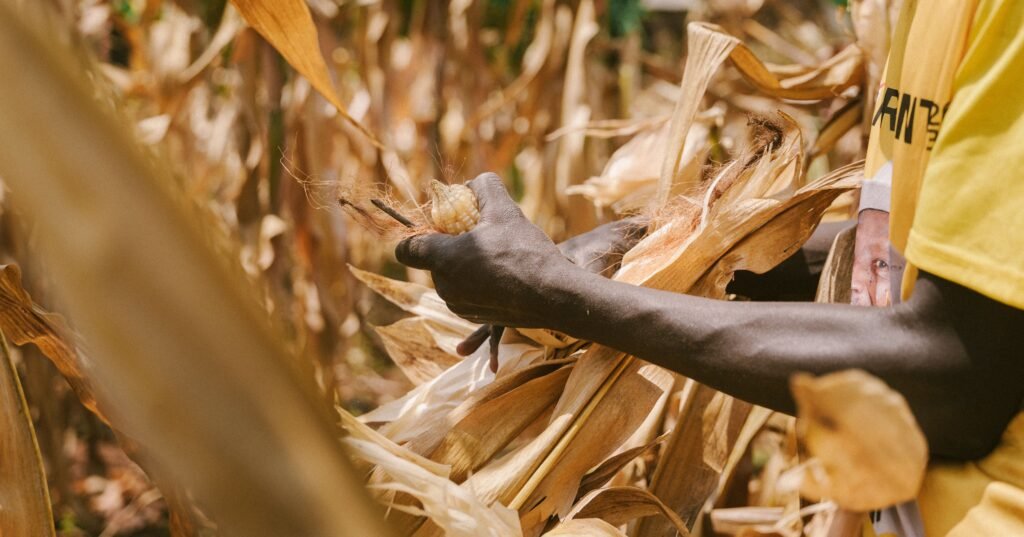
Examples: The Hybrid Seed Industry.
Consider seed breeders like Seed Co, which is one of Africa’s giant, or international players like Corteva. While primary farmers risk seasonal drought or pest infestation during a crop cycle, seed companies capture consistent upstream margin through biological research, genetic improvement, and intellectual property. They do not compete on the daily risk of managing rainfed fields; they capture economic value by solving the biological yield problem before the seed ever touches the soil.
Related Reading: How Farmers Can Use the Business Model Canvas to Scale Their Business
Production Begins Value Creation, Agribusiness Converts It to Margin
Primary farming exists to generate biological output, meaning the producer’s daily challenges center on mastering natural and environmental variables. Success on the farm is measured in tangible output metrics, tons per hectare, kilograms per animal, or conversion efficiency, achieved through the management of soil health, water access, pest control, and seed genetics. However, exceptional biological yield does not automatically translate into a profitable business enterprise. That is why we see farmers achieving record output and still suffering severe financial losses if input costs exceed market value, post-harvest spoilage claims part of the harvest, or local transport costs consume the operational margin before the product reaches a buyer.
This disconnect highlights the core difference between producing a raw commodity and capturing economic value. Agribusiness represents the strategic orchestration of input procurement, finance, storage, preservation, transport, and marketing necessary to convert raw agricultural commodities into bankable returns. While agriculture or farming on its own solves the initial problem of physical volume, agribusiness solves the structural problems of quality control, geographic movement, time utility, and market integration. Most, if not all, successful agricultural ventures rely on getting the biological parameters right but also focus on sustaining financial performance which depends more on building or plugging into an agribusiness framework that protects margins after the harvest leaves the field.
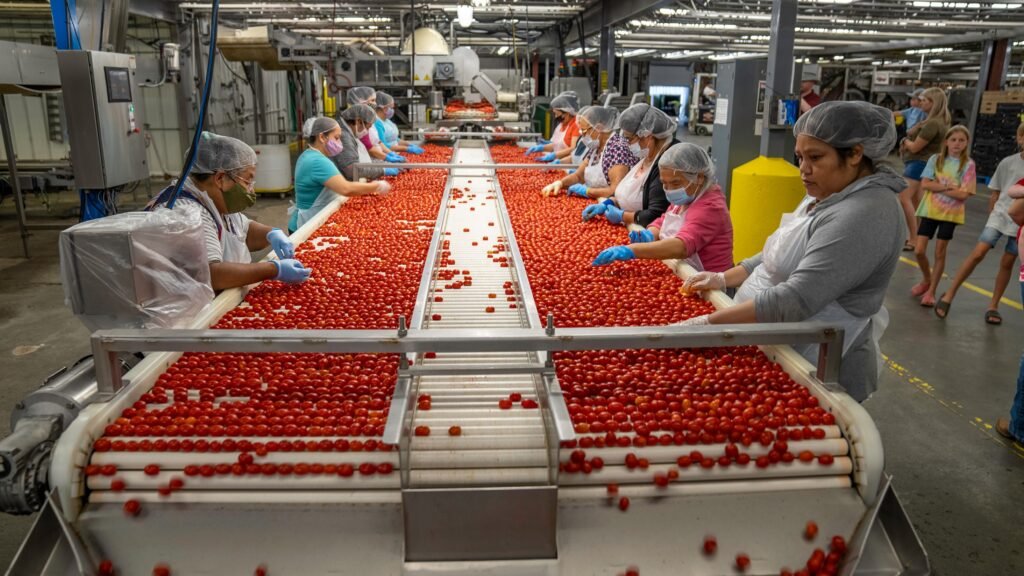
Example: Tomato Farming vs. Paste Processing
In many seasonal horticultural markets, smallholder farmers simultaneously flood open markets with fresh tomatoes during peak harvest, causing prices to collapse to near-zero levels while tons rot on the ground. Meanwhile, commercial processors like Dairibord in Zimbabwe or the South African giant Tiger Brands who make industrial paste manufacturers, buy freshly harvested tomatoes at discount rates, process them into shelf-stable pastes, ketchups, and canned goods, and capture high-margin, predictable retail cash flow year-round. It is you the primary grower, who bears the biological perishability risk; the processor captures the market transformation margin.
Tracing the Product Beyond the Farm Gate
To identify where true commercial value accumulates, one must follow a commodity along its entire journey from production to end consumer. Consider maize: long before a bag of mealie reaches the kitchen, dozens of independent commercial entities have already extracted value from the seed to the day it reaches the table (farm-to-table). Seed companies develop resilient genetics, chemical manufacturers supply protection inputs, microfinance institutions provide seasonal production credit, equipment dealers supply mechanization, transport companies move bulk grain, silo operators handle aggregation and drying, industrial millers process the grain, and packaging firms format the final retail unit. Each participant in this sequence solves a specific friction point for which the market is willing to pay.
Viewing the sector through this multi-stage lens transforms how entry opportunities are evaluated. Rather than just thinking in terms of which crop offers the highest theoretical yield or price per ton, the strategic focus is to identify structural inefficiencies along the supply chain. The farmer solves the foundational problem of raw production, the transporter addresses physical displacement, the silo operator manages storage and risk, and the miller executes transformation. By mapping these operational stages, entrepreneurs can identify precise bottlenecks, such as inadequate cold storage, slow haulage, or fragmented market pricing, and design focused business models that monetize those gaps.
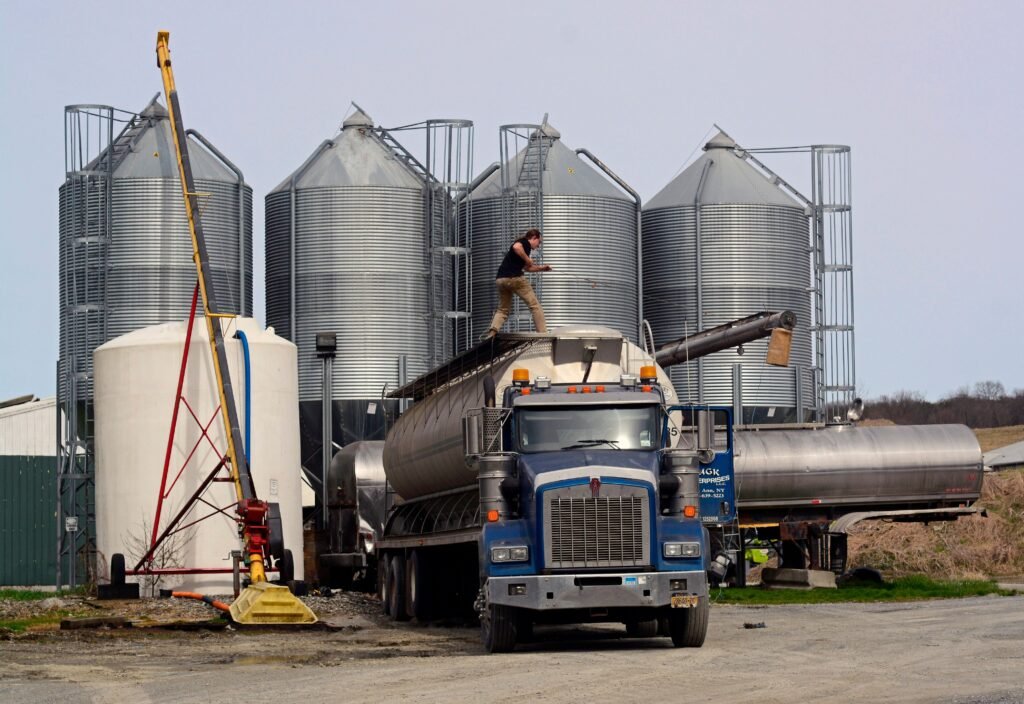
Example: The Grain Supply Chain Ecosystem
In regional grain corridors, raw maize moves from commercial and small rural producers to corporate buyers like National Foods, PHI Commodities or Grains Marketing Board (GMB) facilities. The enterprise that bridges these distant endpoints, such as an independent aggregator managing a fleet of 10-tonne flatbed trucks and moisture-controlled aggregation hubs, solves a critical double bottleneck. They eliminate the farmer’s difficulty in reaching distant urban markets while eliminating the corporate miller’s cost of dealing with thousands of fragmented farm-gate sellers.
Overcoming the Visibility Bias in Entry Decisions
A major reason new entrants struggle in the agricultural space is the tendency to choose entry points based on visibility rather than competitive strength. Farmland, standing crops, livestock herds, and heavy machinery represent the most visually striking elements of the food system, leading many to default to primary production as the primary symbol of success. However, high visual prominence does not equal structural profitability or personal advantage. Entering primary farming without basic agronomic or livestock farming knowledge, adequate scale, or cheap long-term capital frequently exposes new entrants to unnecessary operational risk.
Strategic alignment demands matching personal capability with sector opportunities. Think of an entrepreneur with a background in logistics, for instance, will likely generate far stronger returns by building a refrigerated transport fleet or an aggregation hub than by attempting to grow high-value horticulture without prior experience. Similarly, someone with trade or financial expertise may build a more resilient business through commodity trading or input financing. A sector’s broader economic appeal does not guarantee success for every individual participant; sustainable advantages are built where personal competencies, capital structure, and network access interact with real market demands.
Capturing Value in the Spaces Between Production and Retail
Like one of my mentors Strive Masiyiwa always puts it, there is a lot of money in Africa’s agricultural value chain. It is true that across expanding agricultural economies, some of the most consistent returns are found in the operational spaces connecting primary farms to urban consumption hubs. Smallholder and commercial farmers routinely face challenges securing stable buyers, while food processors struggle to obtain consistent, high-quality raw materials. Meanwhile, inadequate cold-chain infrastructure, high transport overheads, limited post-harvest processing capacity, and opaque market pricing create substantial loss points throughout the middle of the supply chain. These chronic gaps represent clear commercial opportunities for structured, professional service providers.
Building a profitable enterprise in this space does not require holding title to large tracts of land or managing seasonal biological risks. Businesses focused on aggregation, primary sorting, temperature-controlled transit, and direct market coordination generate recurring revenue streams by making the overall system more efficient. As agricultural output expands, the demand for auxiliary services, including contract spraying, custom harvesting, soil testing, financial facilitation, and digital trade platforms, grows proportionally. By addressing these systemic friction points, agribusiness entrepreneurs establish defensible, cash-generative positions that benefit from overall sector growth regardless of farm-level yield variations.
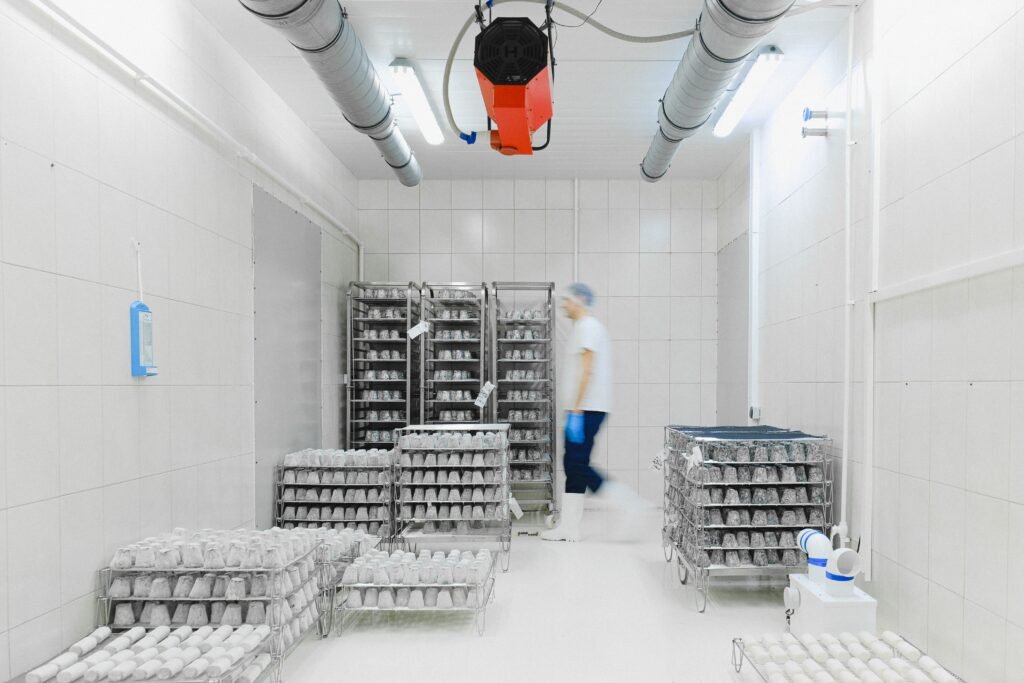
Example: Cold-Chain Logistics and Solar Refrigeration
Ventures like ColdHubs in West Africa address the post-harvest loss bottleneck by deploying solar-powered walk-in cold rooms at rural farm-gate markets. Smallholder farmers and traders pay a daily fee per crate to store perishable produce, reducing spoilage losses from over 40% down to under 5%. The business model requires zero farmland ownership; it monetizes an essential bridge between harvest and retail using technology, earning predictable fee-for-service revenue while directly protecting grower margins.
The Strategic Pathways: Vertical Integration, Horizontal Expansion, and Pivoting
Once you recognize that primary production is surrounded by a larger commercial architecture, the key strategic question now becomes how to structure your enterprise for long-term growth. Independent primary producers often find themselves squeezed between rising input costs upstream and volatile commodity market prices downstream. To escape this margin compression, established farm enterprises usually pursue one of several recognized structural pathways: vertical integration, horizontal expansion, strategic pivoting, or corporate mergers.
Vertical integration involves expanding your farm’s operations into adjacent stages of the supply chain to capture higher margins and control operational risks. Upward (or backward) integration occurs when a farming business brings input supply or breeding operations in-house, such as a commercial poultry farm establishing its own parent-stock hatchery or feed mill to secure input quality and lower unit costs. Downward (or forward) integration occurs when a producer moves closer to the final consumer, such as a horticultural farm building its own cold-storage packhouse, fruit-processing facility, or direct retail distribution network to capture the retail margin rather than selling raw bulk produce at the farm gate.
Horizontal integration occurs when an enterprise expands by acquiring or duplicating similar production units at the same level of the value chain. For instance, a commercial dairy operator might acquire neighboring herds or lease additional pastureland to achieve economies of scale, lower overhead costs per liter of milk, and gain stronger bargaining power when negotiating bulk pricing with commercial processors.
When primary production faces structural headwinds, such as recurring droughts, land constraints, or severe price suppression, agribusiness leaders often execute a strategic pivot. Pivoting means shifting core business operations away from primary farming toward providing essential services to other producers. A farm owner with heavy earthmoving equipment and tractors might pivot from growing grain to offering custom land preparation, harvesting, and haulage services to neighboring farms. Similarly, a producer with established borehole capacity might pivot into commercial water supply or seedling propagation. In more mature markets, enterprises frequently utilize mergers and strategic joint ventures, combining a primary farm’s land assets with a logistics provider’s transport fleet or a distributor’s market access, to build a fully integrated, resilient supply chain.
In Conclusion
Building a sustainable, highly profitable commercial venture in agriculture ultimately requires looking beyond the field to understand how financial and physical value moves through the broader food system. While primary farming remains the biological bedrock of global food security, long-term wealth accumulation and risk reduction belong to those who build or integrate into agribusiness frameworks that solve real supply chain inefficiencies. Whether your most competitive path involves mastering crop yields, integrating downward into consumer packaging, scaling horizontally through herd expansion, or pivoting entirely into specialized service delivery, success depends on aligning your unique operational capabilities with market demand. Strategic entrepreneurs do not simply ask how to produce more; they identify where structural bottlenecks exist along the supply chain and build resilient business models designed to capitalize on solving them.
You may also be intrested in reading: 5 Things You Should Consider Before Starting a Farming Business